Gravina Breaks Silence, Defends FIGC Record After Italy's World Cup Failure
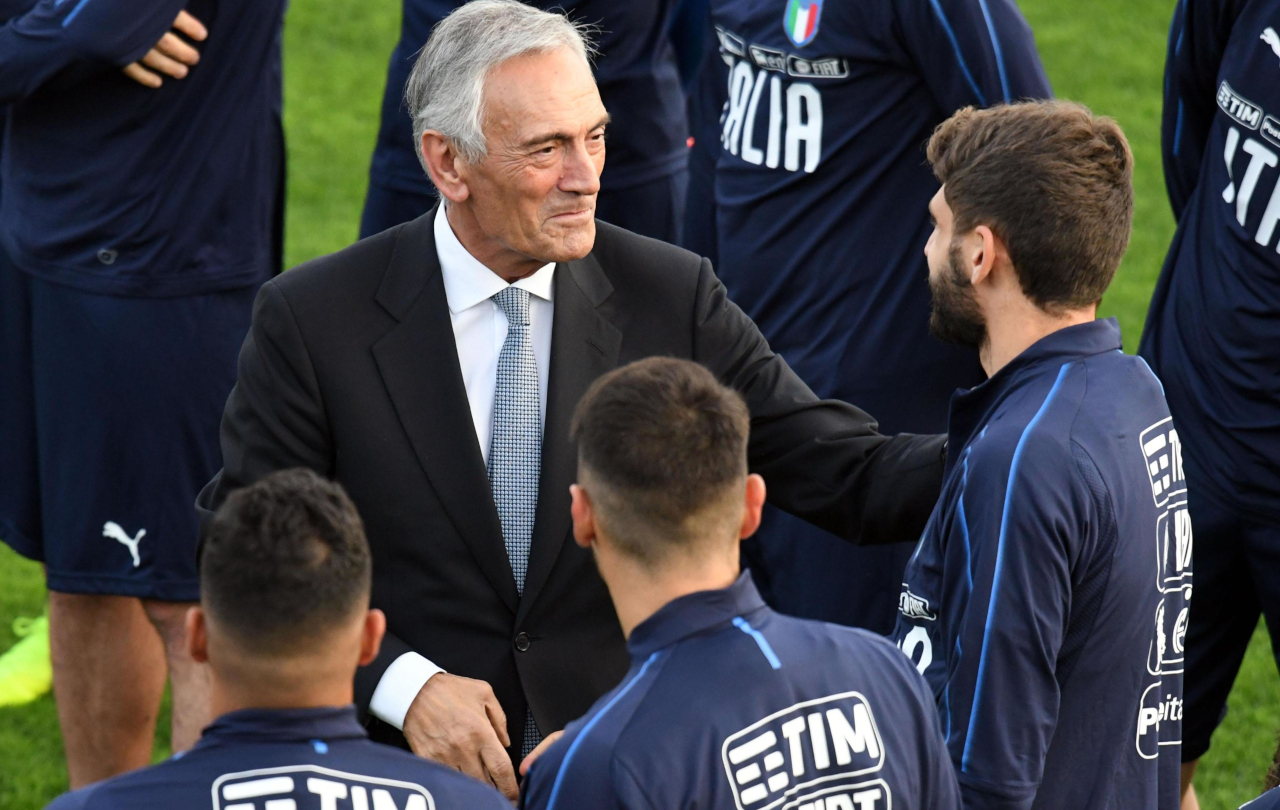
Former Italian Football Federation (FIGC) president Gabriele Gravina has spoken publicly for the first time since his resignation, defending the federation's work in the wake of Italy's failure to qualify for the 2026 World Cup. Gravina, who stepped down following the Azzurri's failure to qualify for a second consecutive World Cup, gave an interview to Italian newspaper Corriere della Sera.
Gravina, 72, used the interview to defend the federation's broader work, arguing that its value should not be judged on the senior men's national team results alone. He pointed to the federation's wider impact, stating it promotes the sport to over 800,000 minors and runs significant social and youth programs. "The federation promotes football, which has a considerable impact on society. Think of the more than 800,000 minors who participate, the projects carried out with schools, the inclusion programs," Gravina said, according to the report. He also highlighted the success of other national teams and youth sides.
Addressing the criticism of his tenure, Gravina responded with irony to the personal criticism he faced after the crucial qualifying defeat to Switzerland and the draw with Bosnia and Herzegovina. "Perhaps I should have been a better footballer: I missed two penalties against Switzerland and three chances against Bosnia, I sent one penalty over the bar and another onto the crossbar. Perhaps I should have trained more," he said, before adding, "I take my responsibilities. I did not keep the promise I made to the Italian fans. My resignation is a final act of love for football."
Gravina, who had led the FIGC since 2018, resigned in November after Italy failed to qualify for the 2026 World Cup, finishing behind Switzerland in their qualifying group. His departure followed a period of intense scrutiny over the national team's performance and the direction of the federation. In his comments, he argued that the federation's work should not be judged solely on the senior men's team's results, but on its wider impact on Italian football at all levels.
The 72-year-old's tenure was also marked by Italy's triumph at the 2020 European Championship, a victory that he and the federation had hoped would herald a new era. However, the subsequent failure to qualify for a second straight World Cup, coupled with a failure to qualify for the 2022 tournament in Qatar, placed immense pressure on his leadership. Gravina's resignation was widely seen as an acceptance of responsibility for the qualifying failure, though his latest comments suggest a belief that the overall health of Italian football under his leadership was stronger than recent results indicate.